Ultra-processed foods (UPF) have become a major health concern throughout the past decade. Packaged foods are taking over grocery stores and that’s one of the leading causes of poor health. That’s why for this project, I wanted to showcase factual evidence of why ultra-processed foods are bad and affecting our health negatively. I use bright playful colors to attract attention, similar to how many packaged foods make this design choice to grab focus on their brand product. For my hopes, I wanted to steal this design strategy for my design but informing the viewers with the opposite intent.
The term “ultra-processed foods” originated from the Nova food classification system, which defines food in four categories, ranging from least to most processed: Unprocessed or minimally processed foods like fruit, vegetables, milk, or fish. Processed culinary ingredients like salt, sugar, olive oil, and butter. Processed foods, such as jam, pickles, or canned fruit. Ultra-processed foods, like energy drinks, instant oatmeal, sliced bread, or hot dogs.
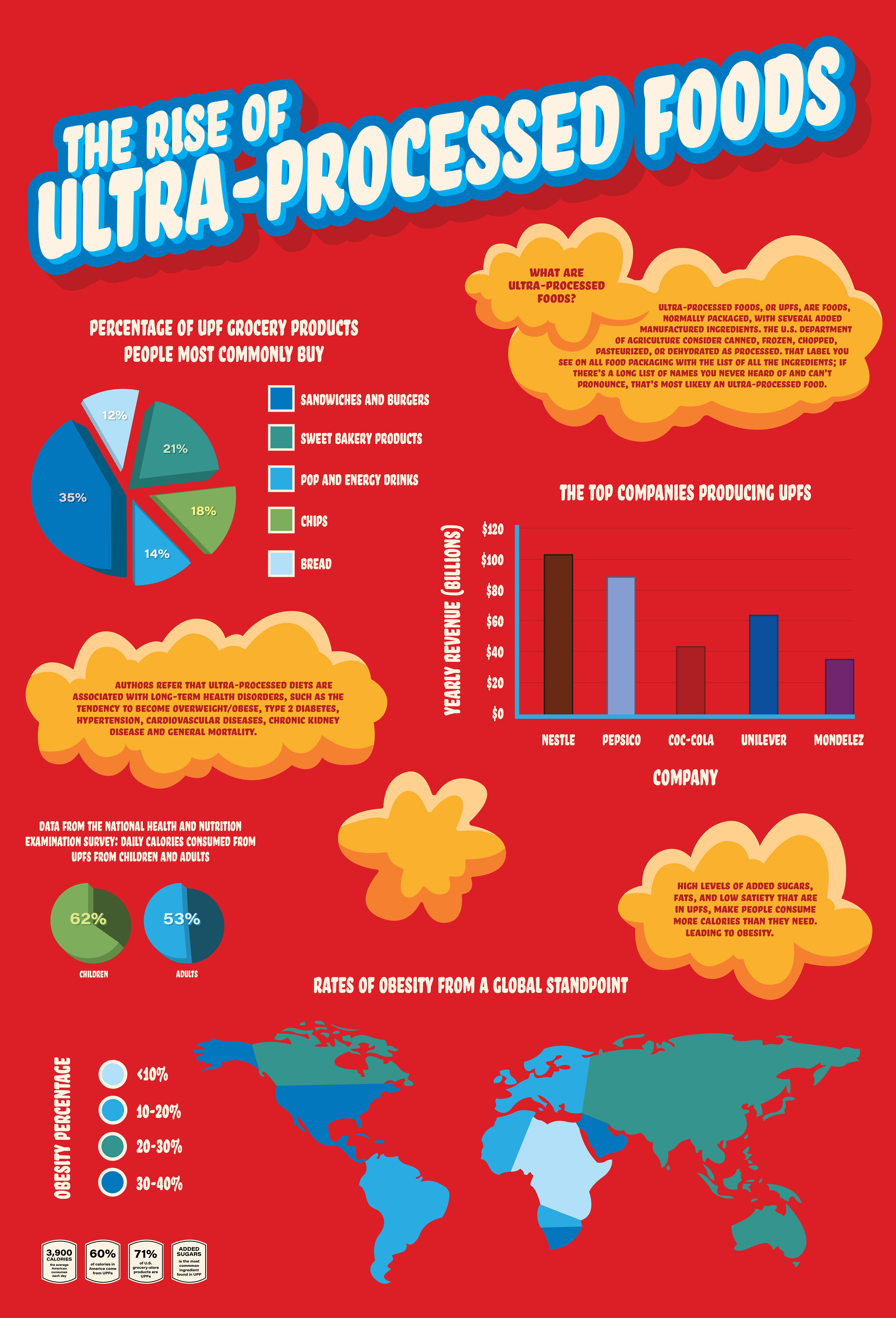
The pie chart explains the most popular grocery products are ultra-processed. Some of the things we put into our cart, we might not consider are actually harmful foods.
The bar chart explains the top companies producing ultra-processed foods. Some of these are companies most people recognize but aren’t aware of what their products are.
The third data chart is a comparison between adults and children’s daily calory consumption. This data is important because kids eat way more ultra-processed foods than adults do, and if anything, the number should be way lower than adults. This just goes to show companies are targeting the youth to eat unhealthier foods.
The last chart is a correlation between obesity and ultra-processed foods with a map showing the areas of high obesity rates. Because of ultra-processed foods, people’s health becomes a big issue with a high chance of obesity if it is a part of their diet.